Guide
Wolf Oven Temperature Calibration: Why It Drifts and How We Fix It
If your Wolf oven runs hot or cold, calibration is usually the answer. Here's what causes temperature drift and how a specialist restores accurate baking.
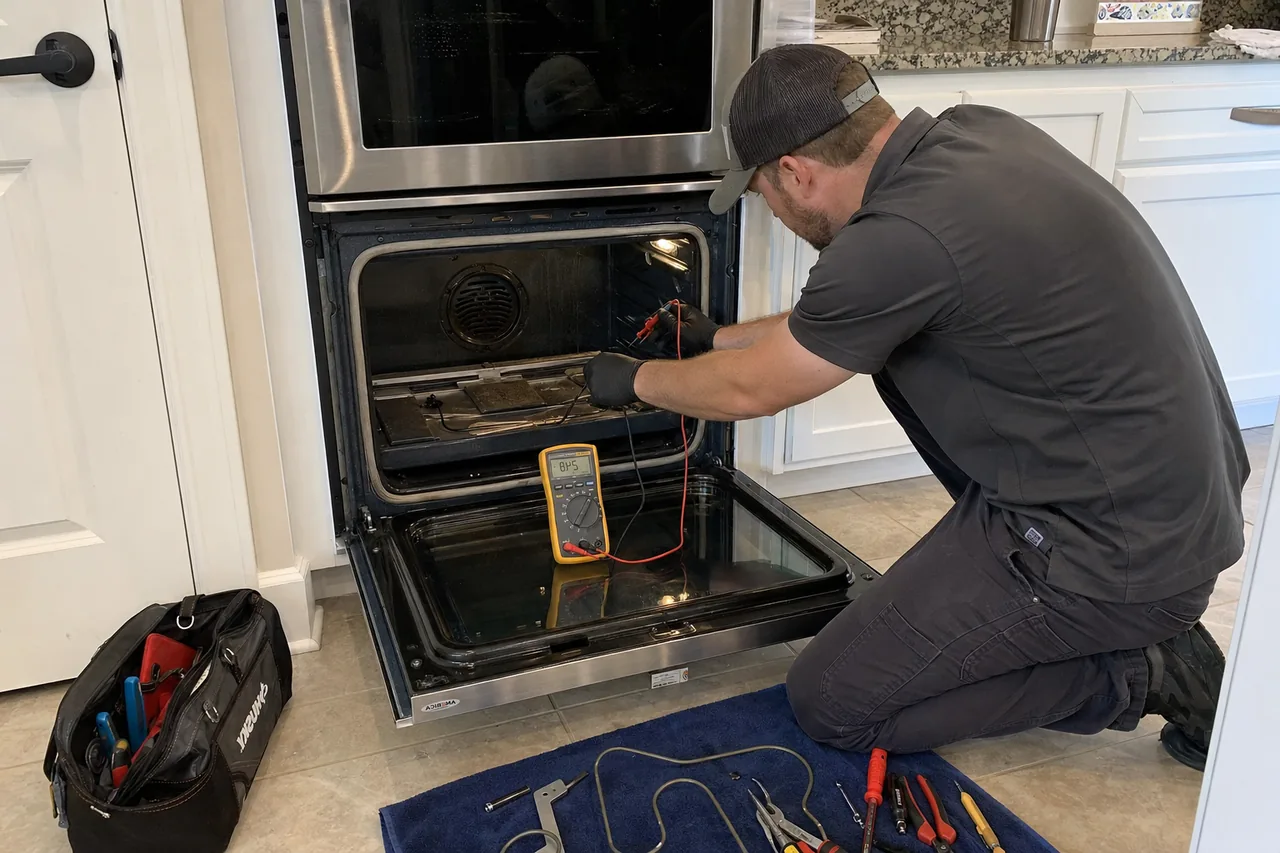
A Wolf oven is engineered for precise, even heat — so when your cookies brown too fast or a roast takes far longer than the recipe says, it’s frustrating. In most cases the fix isn’t a new oven. It’s calibration.
Why Wolf Ovens Drift Over Time
Wolf ovens are calibrated at the factory, but real-world conditions cause the actual cavity temperature to drift from the set point:
- Component aging — the oven sensor (RTD probe) changes resistance slightly as it ages
- Installation environment — airflow, cabinetry and venting differ from the factory bench
- Usage patterns — heavy self-clean cycles and daily high-heat cooking stress components
- A previous oven’s bias — if your last oven ran hot, a correctly calibrated Wolf can feel “cold”
How to Tell Calibration Is the Problem
Before assuming a major fault, look for these signs:
- Food consistently over- or under-cooks by a predictable amount
- Both bake and convection modes are off by a similar margin
- The oven still heats, holds and cycles — it’s just off the mark
If only one mode misbehaves, or the oven won’t reach temperature at all, the cause is more likely a heating element, igniter or control board — not calibration.
Our Calibration Process
- Measure actual temperature with a calibrated thermocouple placed at multiple rack positions
- Compare against the set point across bake and convection modes
- Adjust the calibration offset — Wolf ovens typically allow about ±25°F in either direction
- Re-verify after the adjustment, then confirm even heat distribution
When It’s More Than Calibration
Uneven cooking that calibration can’t solve usually traces to:
- A weak or failed convection fan motor (heat isn’t circulated evenly)
- A degraded bake or broil element producing less heat
- A temperature sensor reading incorrectly and misleading the control board
- Blocked vents or a worn door gasket letting heat escape
We test each of these before recommending any part, so you don’t pay for guess-and-swap repairs.
Keep Your Wolf Accurate
- Use an independent oven thermometer occasionally to spot drift early
- Check the door gasket yearly — a poor seal wastes heat and skews temperature
- Avoid excessive self-clean cycles, which stress the sensor and elements
- Have a professional calibration if you notice consistent over- or under-cooking
Talk to a Wolf Specialist
If your Wolf oven’s temperature is off, call (914) 275-0968 for expert calibration and repair in White Plains and across Westchester County. Most visits are same-day, use genuine OEM parts, and are backed by a 1-year warranty.